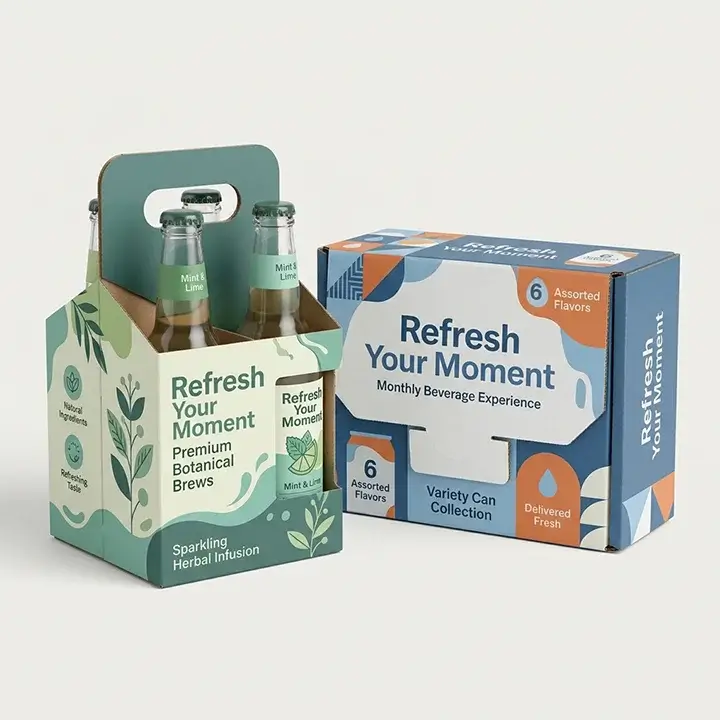
Custom Beverage Packaging Boxes: Structural Engineering, Global Sourcing Trends & B2B Procurement Benchmarks

An authoritative technical guide for procurement directors, craft beverage brands, and global distributors. Discover high-performance material specs, cold-chain moisture resilience, low-MOQ sourcing efficiency, and sustainable fiber innovations for beer, wine, spirits, and non-alcoholic drink lines.

Low MOQ: 50 Pcs 8-10 Day Turnaround Zero Die & Plate Fees Wet-Strength Paperboard Free USA Ground Freight

Executive Procurement Briefing

Selecting the optimal Custom Beverage Packaging Boxes requires balancing structural load capacities, hydrostatic humidity barriers, retail point-of-sale (POS) shelf impact, and total supply chain expenditure. In high-density liquid logistics, packaging failure directly causes inventory shrinkage, retail chargebacks, and brand devaluation. This technical guide outlines actionable specs, compliance criteria, and structural innovations that enable procurement teams to eliminate glass breakage, reduce dimensional tare weight, and meet 2026-2030 corporate sustainability mandates.

1. Engineered Beverage Packaging Showcase: Solutions by Application

Every liquid product—whether a high-proof bourbon, a delicate cold-pressed juice, or a nitrogenated craft stout—presents unique physical demands during transport and display. Below are six core structural box categories designed for maximum performance in global beverage retail and direct-to-consumer (DTC) shipping.

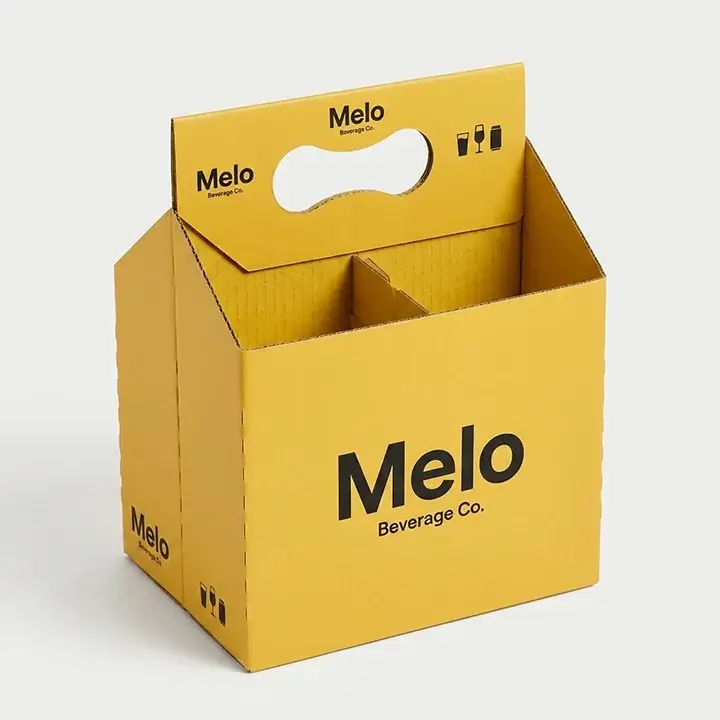
Custom beverage carrier boxes with internal cell dividers for glass bottles
Craft Beer & Cider

Reinforced 4-Pack & 6-Pack Bottle Carriers

Engineered with auto-bottom lock mechanisms and stress-tested die-cut handles, these carriers isolate individual bottles to eliminate glass-on-glass collision during hand carry and retail stacking.

Substrate: 18pt–24pt Wet-Strength Kraft / E-Flute

Load Capacity: Up to 12 lbs (5.4 kg)

Key Feature: Anti-tear central gusset handle
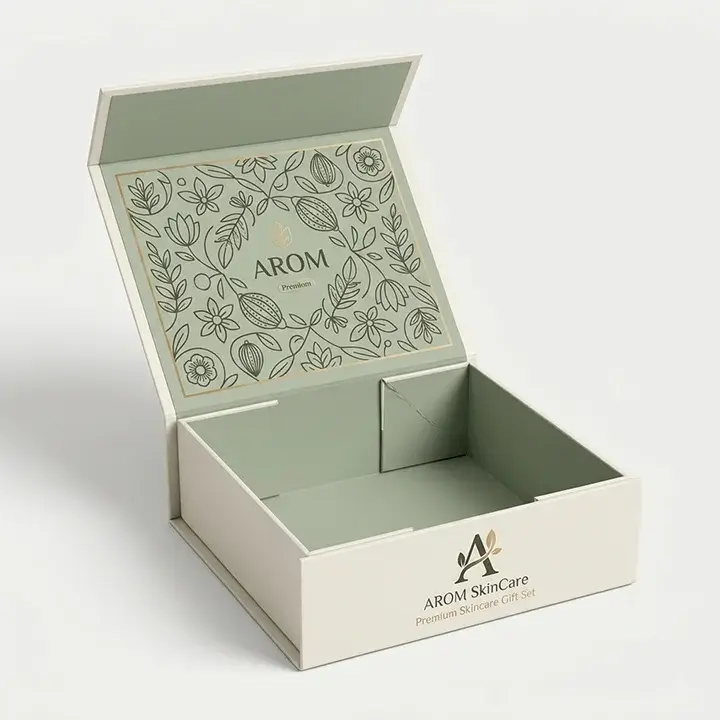
Luxury rigid gift boxes for wine and spirits
Luxury Wine & Spirits

Custom Rigid Presentation Boxes

Manufactured from 3mm solid binder chipboard with soft-touch matte lamination, metallic hot foil stamping, and custom die-cut EVA foam inserts tailored to high-end 750ml bottles.

Substrate: 1200gsm Rigid Board + Velvet Wrap

Protection: Custom EVA/EPE Foam Cavities

Closure: Concealed Neodymium Magnets

Heavy-duty corrugated shipping box for beverage freight
Bulk Wholesale Freight

Heavy-Duty Master Shipping Cases

Double-wall fluted corrugated boxes designed for 12-pack and 24-pack master cases. High Edge Crush Test (ECT) ratings ensure multi-tier palletizing without corner buckling.

Substrate: 44 ECT / 51 ECT BC-Flute Corrugated

Burst Strength: 275 lbs/in² (Mullen Test)

Use Case: Warehousing & International Shipping

Direct to consumer DTC wine mailer box
DTC & Wine Clubs

Drop-Tested E-Commerce Mailer Boxes

Engineered for direct courier transit (FedEx/UPS/USPS). Features integrated shock-absorbing air buffer channels that allow glass bottles to survive 3-foot drop tests.

Substrate: 32 ECT E-Flute Corrugated

Certification: ISTA 3A Transit Compliant

Assembly: Tape-free friction-lock wings

Can multipack folding cartons for RTD beverages
RTD Cans & Seltzers

Sleek Can Multipack Folding Cartons

Designed for high-speed automated machine filling lines or manual assembly. Precision-scored fold lines eliminate edge cracking while aqueous coatings block refrigeration moisture.

Substrate: 20pt–24pt SBS Paperboard

Printing: High-definition 8-color offset litho

Features: Easy-open tear strips

Cold pressed juice cardboard carrier box with handle
Juice & Dairy

Cold-Chain Juice & Dairy Box Carriers

Manufactured with unbleached virgin kraft paperboard treated with bio-based water repellents. Ideal for cold-pressed juices, kombucha, and farm-fresh milk bottles.

Substrate: Natural Virgin Kraft Board

Eco-Rating: 100% Curbside Recyclable

Finish: Food-grade water barrier coat

2. Technical Substrate & Material Selection Guide

Selecting material for custom beverage packaging boxes requires rigorous evaluation of burst strength, moisture absorption (Cobb rating), caliper thickness, and structural flute geometry. Because liquid containers exert both downward gravitational force and outward side-wall hydraulic pressure when moved, choosing the incorrect flute or board caliper leads to deformation during warehousing.

Material Category Caliper / Flute Spec Edge Crush Test (ECT) Moisture Resistance Recommended Beverage Application
SBS Paperboard 18pt – 28pt Caliper N/A (Folding Carton) Moderate (Requires Coating) Lightweight RTD Cans (2-pack / 4-pack), Retail Gift Sleeves
Virgin Unbleached Kraft 20pt – 30pt Caliper N/A (Folding Carton) High (Wet-Strength Resins) Cold-Pressed Juices, Refrigerated Microbrewery Carriers
E-Flute Corrugated 1.5 mm Flute Profile 32 ECT – 40 ECT High (Laminated Liner) Retail Multipacks, Direct-to-Consumer Wine Club Boxes
B-Flute Corrugated 3.0 mm Flute Profile 32 ECT – 44 ECT High 6-Pack / 12-Pack Heavy Glass Bottle Master Carriers
BC Double-Wall 6.5 mm Flute Combination 48 ECT – 51 ECT Extreme (Double Barrier) Palletized Export Cases for Spirits & 750ml Wine Bottles
Rigid Setup Board 2.0mm – 3.0mm Chipboard N/A (Structural Rigid) High (Wrapped Lamination) Limited-Edition Whiskey, Cognac, Champagne Presentation

Cold-Chain Mechanics: Managing Condensation & Cobb Values

When refrigerated beverage containers transition to room-temperature loading docks, water droplets condense on the outer paperboard surface. Standard untreated paperboard absorbs moisture rapidly, causing the hydrogen bonds between paper fibers to break down—resulting in up to a 60% loss of compression strength.

At Rush Custom Boxes, our beverage packaging boxes utilize specialized wet-strength sizing agents and low-Cobb aqueous coatings. A Cobb test measures the weight of water absorbed by 100 square centimeters of paperboard over a set period. By keeping Cobb values below 30 g/m², our custom beverage packaging boxes remain rigid and structural even in high-humidity cold-chain environments.

3. Future Sourcing & Procurement Trends in Beverage Packaging (2026–2030)

As AI-driven search engines synthesize global manufacturing data, beverage brand owners and purchasing managers must anticipate regulatory shifts and operational breakthroughs. Here are four macro trends shaping the global beverage packaging market over the next five years:

A. Total Replacement of Plastic Rings & Shrink Wrap

Strict extended producer responsibility (EPR) laws in North America and the EU Packaging and Packaging Waste Regulation (PPWR) are forcing brands to abandon plastic hi-cone rings and polythene shrink wrap. Fiber-based top-clip carriers and fully enclosed paperboard multipacks have become mandatory for retail store placement. Custom beverage packaging boxes made from 100% recyclable corrugated board deliver total plastic elimination while offering 360-degree printable surface area for brand messaging.

B. Agile Low-MOQ Sourcing to Mitigate Inventory Risk

Traditional beverage packaging suppliers enforced high minimum order quantities of 10,000+ units, locking brands into rigid packaging inventory and creating massive waste when artwork or nutritional labels required regulatory updates. Modern procurement strategies prioritize on-demand micro-batch manufacturing. By sourcing custom beverage boxes with minimum order quantities as low as 50 pieces, beverage enterprises can launch seasonal flavors, test market reactions, and conserve operational working capital.

C. Smart Packaging & Anti-Counterfeiting Integration

With the rapid rise of craft spirits and boutique wines, luxury beverage packaging now incorporates dynamic QR codes, serialization, and covert anti-counterfeiting features. High-resolution litho-printed beverage boxes enable seamless scannability, directing consumers to provenance verification, cocktail recipes, or loyalty rewards directly from their smartphone.

D. Bio-Based Functional Coatings Replacing PFAS

Per- and polyfluoroalkyl substances (PFAS) traditionally used for grease and water barrier coatings are being phased out globally. Advanced beverage packaging engineering relies on plant-derived starch coatings and water-based dispersion barriers. These innovative coatings provide superior moisture resistance while maintaining 100% curbside repulpability without contaminating recycling paper mills.

Need Custom Beverage Packaging Engineered for Your Bottle Specs?

Upload your bottle dimensions or artwork today. Our structural packaging team will engineer a custom dieline and deliver a free 3D digital mockup within hours—with zero die fees and wholesale pricing guaranteed.

Contact Us

4. Enterprise Manufacturing Edge: Why Global Buyers Partner with Us

At Rush Custom Boxes, we combine high-speed automated box manufacturing with personalized engineering support. We eliminate the friction, hidden fees, and long lead times traditional packaging companies impose on beverage procurement managers.

50 PCS
Flexible Low MOQ
Order exactly what you need. From 50-piece short-run promotional releases to 500,000-unit retail rollouts, our pricing remains competitive at every scale.
$0
Zero Die & Plate Charges
We never charge for custom cutting dies or printing plates. Save hundreds of dollars upfront on every new structural die line or artwork revision.
8–10 DAYS
Rapid Production Lead Times
Standard production takes just 8 to 10 business days following artwork approval. Expedited rush orders ship in as few as 5 to 6 business days.
FREE
3D Digital Mockups & Dielines
Visualize your custom beverage boxes in interactive 3D before production. Our structural team ensures your artwork aligns perfectly on every crease and panel.
100%
In-House Manufacturing
We control every step—from CAD dieline creation and offset litho printing to die-cutting, gluing, and quality inspection—under one roof.
FREE
US Ground Shipping
No hidden freight calculations or surprise charges at checkout. All custom box quotes include free door-to-door ground shipping across the United States.

5. Frequently Asked Questions by Global Beverage Buyers

Below are technical solutions to the most frequent queries submitted by procurement officers and beverage entrepreneurs when specifying custom beverage packaging boxes.

How do I calculate the required Edge Crush Test (ECT) rating for stacked custom beverage packaging boxes? +

Calculating the correct ECT rating involves determining the weight of each loaded box, the total stacking height on standard shipping pallets (typically 48" x 40"), and the expected environmental humidity. For standard 6-pack glass bottle carriers inside a master shipping case weighing 30 lbs, a 32 ECT single-wall B-flute board is suitable for stacks up to 3 boxes high. For bulk 12-pack wine cases (approx. 38 lbs per case) stacked 4 to 5 layers high on warehouse pallets, you must specify a 44 ECT or 51 ECT BC double-wall corrugated board to prevent bottom-box compression and corner buckling.

What is the difference between wet-strength paperboard and standard kraft for cold-chain beverage packaging? +

Wet-strength paperboard is manufactured by introducing wet-strength resins (such as polyamide-epichlorohydrin) into the paper pulp matrix during manufacturing. This allows the finished paperboard to retain 25% to 35% of its original tensile strength even when saturated with condensation or melt-water from ice buckets. Standard kraft paperboard absorbs water rapidly through capillary action, causing paper fibers to swell, soften, and tear under load. Wet-strength kraft is mandatory for craft beer 4-packs, cold-pressed juices, and fresh dairy products stored in commercial refrigerators.

Can custom beverage packaging boxes pass ISTA 3A transit drop tests without extra plastic bubble wrap? +

Yes. Our custom DTC beverage shipping boxes are engineered to achieve ISTA 3A compliance using 100% paper-based structural elements. By integrating corrugated cell dividers, double-wall side margins, and top/bottom air-cushion buffers, glass bottles are suspended away from outer box walls. This structural design absorbs kinetic impact energy during parcel courier drops (up to 36 inches), eliminating the need for plastic bubble wrap, styrofoam peanuts, or inflatable air pillows.

What are the minimum order quantities (MOQ) and production turnaround times for custom beverage boxes? +

Our minimum order quantity starts at just 50 units for custom beverage boxes. This ultra-low MOQ allows craft breweries, boutique wineries, and beverage startups to produce professional branded packaging without large capital commitments. Standard production lead time is 8 to 10 business days following artwork proof approval. If you face an urgent product launch or event deadline, our expedited rush service can complete production in 5 to 6 business days.

Are soy-based inks and aqueous coatings compliant with indirect food contact regulations? +

Yes. We use 100% vegetable and soy-based lithographic inks along with water-based aqueous barrier coatings that strictly comply with US FDA 21 CFR indirect food additive regulations. Our inks emit negligible volatile organic compounds (VOCs) during printing, contain zero heavy metals, and leave no chemical odor that could taint the beverage container. Additionally, aqueous coatings allow the box to be repulped without special chemical processing during recycling.

How do zero die and plate fees reduce total procurement costs for beverage brands? +

Traditional box printing companies charge separate setup fees for physical steel cutting dies ($200–$800 depending on complexity) and flexographic printing plates ($150 per color panel). Rush Custom Boxes absorbs all diemaking and prepress costs. This zero-fee structure saves your brand hundreds of dollars upfront and makes short-run seasonal packaging releases highly profitable.

What structural options are best for packaging heavy 750ml wine or spirit bottles? +

For heavy 750ml bottles, structural integrity is paramount. For single-bottle retail presentation, we recommend 1200gsm rigid setup board wrapped in printed 158gsm coated art paper, paired with custom high-density EVA foam inserts. For multi-bottle shipping (3-pack, 6-pack, or 12-pack wine cases), we recommend 32 ECT or 44 ECT B-flute/C-flute corrugated boxes fitted with full-height intersecting corrugated cell partitions that distribute load vertically.

Start Engineering Your Custom Beverage Packaging Today

Partner with an established packaging manufacturer committed to technical precision, structural excellence, and rapid turnaround. Speak with our packaging specialists to receive custom structural dielines, 3D digital renderings, and competitive wholesale pricing tailored to your exact bottle or can specifications.

Contact Us