Packaging Resources & Guides

Packaging Blog & Expert Insights

Explore box design tips, sustainable packaging ideas, material guides, and industry trends to help elevate your brand unboxing experience.
Design Guides Unboxing Ideas Material Selection
0%

Custom Cannabis Packaging Boxes can do more than hold a product. They can shape trust before a customer reads the label. In a regulated market, packaging should protect product quality, communicate essential information, and support responsible use. A sturdy box with precise inserts can reduce movement during shipping. Clear panels, measured dimensions, and readable print can also improve the customer experience. Small details matter. A clean opening experience feels deliberate.

Good packaging decisions require more than attractive graphics. Designers should consider child-resistant features, tamper evidence, material safety, storage conditions, and applicable regional requirements. These standards can vary. Packaging teams should verify current rules with qualified compliance professionals before production. Practical testing also matters. A box may look strong on a screen but crease near the locking tab. That weakness could appear after repeated handling or exposure to moisture. Real samples reveal problems early.

Custom Cannabis Packaging Boxes also give brands space to express their identity without making careless claims. Recycled board, soy-based inks, and right-sized structures may reduce unnecessary material use, when verified by reliable suppliers. Sustainability claims need evidence. Green language alone is not proof. A premium finish can attract attention, yet it may increase cost and complicate recycling. That trade-off deserves honest review. The best solution balances protection, compliance, usability, and visual character. No package is perfect. Thoughtful testing, documented sourcing, and continuous improvement make it more dependable.
Why Choose Custom Cannabis Packaging Boxes?

What Is Custom Cannabis Packaging?

Custom cannabis packaging is product packaging designed around legal requirements, product conditions, and a clear user experience. It may include cartons, pouches, jars, or protective inserts. Unlike generic packaging, it matches the product’s size, weight, moisture sensitivity, and handling needs. A small glass jar needs different support than a flexible pouch. The design is not decoration alone. It is a controlled system.

In regulated markets, custom packaging often includes child-resistant features, tamper evidence, batch details, ingredient information, warnings, and usage directions. Exact rules vary by location. A qualified compliance professional should review every panel before production. Material choices matter too. Light-blocking layers can protect sensitive contents. Strong seals can reduce leakage and odor transfer where legally required. Packaging teams should request supplier testing, material specifications, and proof of print accuracy. Small errors can become expensive recalls.

Good packaging also respects real handling. It should open without frustration, close securely, and remain readable after transport. I would test it with gloves, damp hands, and limited light. Testing matters. Some concepts look excellent on a screen but fail during packing. That is worth admitting. Over-designed boxes may waste material or hide important information. A better solution uses measured dimensions, durable finishes, and simple graphics. Custom packaging can support trust when its claims are accurate, its information is accessible, and its construction matches the product.

How Custom Packaging Supports Cannabis Product Protection

Why Choose Custom Cannabis Packaging Boxes?

How Custom Packaging Supports Cannabis Product Protection

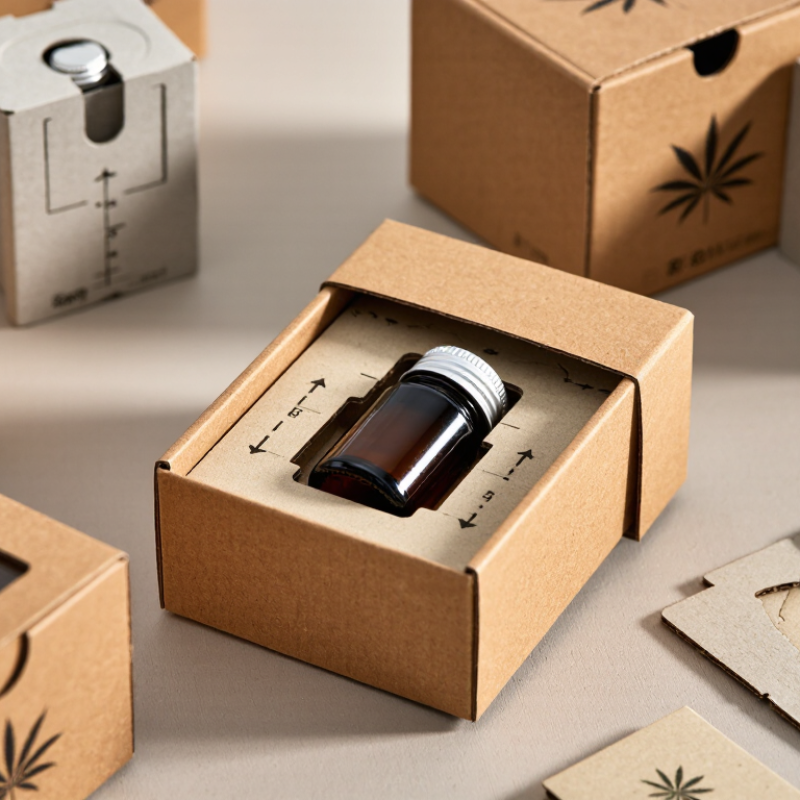
Custom packaging is not only about appearance. It protects regulated cannabis products from crushing, moisture, light, and unwanted opening during storage and delivery. A box designed around the container can reduce movement inside the pack. That matters when glass jars travel through busy distribution routes. Packaging engineers often use compression, vibration, and drop testing to identify weak points. ASTM D4169 provides a recognized framework for distribution testing. It helps teams measure real transport risks instead of guessing.

Research supports this practical approach. Smithers’ sustainable packaging market report forecasts the sector will approach $470 billion by 2027, showing stronger demand for efficient material use. The 2023 PMMI report also highlights traceability, automation, and packaging sustainability as important industry priorities. Custom boxes can support these goals through accurate inserts, tamper-evident features, batch-label spaces, and recyclable board choices. Protection comes first. Sustainability still needs honest review. A thinner box may save material, but it can fail under pressure.

Tips: Match the insert to the product shape. Leave no loose space around fragile containers. Use moisture-resistant coatings only when testing confirms their need. Verify child-resistant components through qualified laboratory testing and applicable regional standards. Ask for compression and drop-test records from the packaging supplier. Small gaps matter. One overlooked corner can damage an entire shipment.

Which Materials and Designs Suit Cannabis Packaging?

Why Choose Custom Cannabis Packaging Boxes?

Custom cannabis packaging should balance protection, presentation, and responsible communication. The right material depends on the product format, storage needs, and local packaging rules. For dry products, sturdy paperboard offers a clean surface for required information and responsible-use guidance. Glass provides strong barrier protection for oils and concentrates, but it adds weight and breakage risk. Recycled materials can reduce waste, although their strength and moisture resistance need careful testing. No material is perfect.

Tips: Request samples before placing a large order. Test the box with real handling, temperature changes, and shelf storage. Check whether labels remain readable after rubbing and light exposure. A small mistake here can create customer confusion.

Design should feel secure without becoming excessive. Child-resistant features may be required in some regulated markets, so consult qualified compliance professionals before production. Tamper-evident seals can show whether a package was opened. Simple structures often improve packing speed and reduce unnecessary material. A matte finish looks refined, but it may reveal fingerprints quickly. Bright colors attract attention, yet high contrast usually supports clearer reading. Add precise dimensions, batch areas, warnings, and storage instructions without overcrowding the panel. Custom packaging works best when every layer serves a practical purpose.

Why Choose Custom Cannabis Packaging Boxes? — Which Materials and Designs Suit Cannabis Packaging?

Material Typical Barrier Performance Key Advantages Design Limitations Suitable Cannabis Packaging Formats Recommended Custom Design Features Recycling Considerations
Glass Excellent moisture and oxygen barrier
Provides strong protection against odor transfer and chemical interaction.
Non-porous, chemically stable, premium appearance, and highly resistant to flavor or aroma contamination. Heavy and breakable; usually requires an outer carton or protective insert for transport. Flower jars, concentrates containers, tincture bottles, and premium product vessels. Use fitted inserts, tamper-evident seals, child-resistant closures, and opaque or tinted finishes where light protection is needed. Glass is widely recyclable, but recycling availability depends on the local collection system. Closures and labels may require separate handling.
Aluminum Excellent light, moisture, and oxygen protection
Provides a strong barrier when properly sealed.
Lightweight compared with glass, durable, opaque, and resistant to light exposure and crushing. May dent; direct contact suitability depends on the product and interior coating. Concentrate tins, pre-roll tubes, capsules containers, and protective secondary packaging. Add child-resistant mechanisms, tamper-evident bands, internal liners, embossed details, and printed regulatory information. Aluminum is recyclable in many regions. Emptying the container and separating non-metal components can improve recyclability.
HDPE Plastic Very good moisture and chemical resistance
Good protection for many solid and liquid products.
Lightweight, impact-resistant, cost-efficient, and available in opaque versions for light-sensitive products. Less rigid and less premium than glass; oxygen protection may require a multilayer structure or additional barrier. Pill bottles, tincture containers, capsules packaging, and child-resistant product bottles. Use ribbed surfaces for grip, calibrated closures, tamper-evident seals, opaque colors, and carton sleeves for added branding space. Often identified as plastic resin code 2. Acceptance varies by local recycling programs and packaging components.
Polypropylene Plastic Good moisture and chemical resistance
Suitable for many rigid containers and closures.
Lightweight, fatigue-resistant, heat-tolerant, and suitable for hinges, lids, and precision-fit components. Barrier performance varies by grade and thickness; transparent formats may offer limited light protection. Caps, jars, tubes, vials, and reusable accessory containers. Consider snap-fit or threaded closures, child-resistant features, tamper evidence, textured finishes, and opaque pigmentation. Often identified as plastic resin code 5. Recycling access differs significantly by region.
Paperboard Carton Limited as a stand-alone barrier
Provides structure, printing space, and secondary protection but usually needs an inner package.
Lightweight, printable, easy to customize, space-efficient, and suitable for retail presentation. Can absorb moisture and does not independently protect products from oxygen, odor, or contamination. Secondary cartons for flower jars, pre-rolls, tinctures, capsules, and multi-item kits. Use die-cut inserts, locking tabs, tamper-evident seals, opaque panels, batch-code areas, and clear regulatory information. Generally recyclable when clean and unlaminated. Foil, plastic windows, heavy coatings, and adhesive components may affect recycling.
Corrugated Board Low product barrier; strong structural protection
Designed mainly for cushioning and shipping protection.
High strength-to-weight ratio, stackable, customizable, and effective for transporting multiple packaged units. Requires an inner container for moisture, odor, oxygen, and product-contact protection. Shipping boxes, subscription boxes, wholesale cases, and protective transit packaging. Use dividers, molded inserts, printed handling instructions, tamper-evident tape, and appropriately sized compartments. Commonly recyclable when dry and free from excessive plastic or wax coatings. Local requirements still apply.
Molded Fiber Moderate structural protection; limited moisture barrier
Barrier performance depends on the fiber treatment and coating.
Paper-based appearance, cushioning capability, renewable-fiber potential, and useful for custom-shaped inserts. May deform when exposed to moisture; coatings can affect recyclability and compostability claims. Protective inserts, jar holders, pre-roll trays, and presentation packaging. Use precision cavities, reinforced edges, moisture-resistant treatments, and a separate sealed primary container. Recyclability and compostability depend on fiber source, additives, coatings, and local processing facilities.

Note: Child-resistant, tamper-evident, labeling, opacity, and recycling requirements vary by product type and jurisdiction. The complete packaging system—not just the material—must be tested and evaluated for applicable regulations.

How Custom Boxes Meet Cannabis Branding and Compliance Needs

Custom cannabis packaging boxes help turn compliance requirements into a clear, practical customer experience. The box should protect the product during storage, transport, and handling. It should also communicate trust before the package is opened.

In packaging reviews, teams often test box strength, closure performance, print accuracy, and label placement. A child-resistant feature may need repeated testing, not just a confident design claim. Tamper-evident details should remain visible after sealing. Opaque materials can support privacy and help protect contents from light. Local rules may require specific warnings, symbols, sizes, or information. These rules can change. A packaging plan needs regular review.

Tips: Create a compliance checklist before designing artwork. Reserve clear space for required text. Use readable type, strong contrast, and durable inks. Request physical samples, then test them with gloves, moisture, and ordinary shipping movement. Small flaws become obvious then.

Custom boxes also strengthen visual consistency through color, texture, structure, and finishing choices. Yet attractive packaging can become confusing when decoration competes with essential information. Keep the front panel calm. Place product details where customers can find them quickly. Include batch information, ingredients, usage guidance, and disposal instructions when required. Recyclable materials may improve the package, but only when local recycling systems accept them. This is where good intentions sometimes need correction. Packaging teams should document revisions, review supplier specifications, and obtain qualified compliance advice before production.

Why Choose Custom Cannabis Packaging Boxes?

How Custom Boxes Meet Cannabis Branding and Compliance Needs

Custom packaging helps brands combine required safeguards with a consistent visual identity. This planning index ranks common packaging priorities from 1 to 5; it is not a legal rating. Child-resistant design, compliant labeling, and tamper evidence should always be reviewed against the regulations in the target market.

What Factors Influence Custom Cannabis Packaging Choices?

Custom cannabis packaging choices depend on more than appearance. Product protection, local regulations, and customer handling habits all matter. A package may sit in a delivery box, a retail drawer, or a humid bathroom cabinet. Its structure should protect contents from light, moisture, crushing, and accidental opening.

Compliance shapes the design. Requirements can differ by region, so packaging teams should verify labeling, warning panels, child-resistant features, and accessibility rules with qualified local advisors. Clear product information builds trust. It also reduces confusion for customers with limited vision or reading difficulties. A tamper-evident seal may add confidence, but only when it works reliably in real conditions. Testing matters.

Material selection brings another decision. Recyclable paperboard can support a lower-waste approach, while inner barriers may improve protection. These goals sometimes conflict. More layers can increase durability, yet they may complicate recycling. That trade-off deserves honest review. A smaller box can reduce shipping space and storage costs. However, tight dimensions may damage labels or make the package difficult to open. Practical trials reveal these problems early.

Budget, order volume, printing quality, and production speed also influence custom choices. Embossed details look attractive, but simple contrast often improves readability more effectively. Packaging specialists can test drop resistance, seal performance, and shelf visibility before full production. One overlooked factor is consistency: every batch should maintain accurate colors, measurements, and required information. Mistakes happen, even in careful workflows. A documented inspection process helps identify them before distribution.

FAQS

Which materials suit dry regulated products?

Sturdy paperboard provides a clean surface for warnings and storage instructions. It is lightweight and easy to print. Moisture resistance still needs testing. No material is perfect.

When is glass a practical packaging choice?

Glass offers strong barrier protection for oils and concentrates. It can help block moisture and preserve product quality. However, it adds weight and breakage risk. Handle it carefully.

Should recycled materials always be selected?

Recycled materials may reduce waste and support sustainability goals. Their strength and moisture resistance can vary. Test them under real storage conditions. Good intentions need evidence.

What should teams test before ordering packaging?

Request samples before placing a large order. Test drops, temperature changes, shelf storage, and delivery handling. Rub printed areas and expose them to light. Labels should remain readable.

How can packaging support regulatory requirements?

Requirements may differ across regions and product types. Verify warnings, required information, accessibility, and child-resistant features with qualified local advisors. Do not guess.

What design details improve customer understanding?

Use strong contrast and readable text. Include precise dimensions, batch areas, warnings, and storage instructions. Avoid overcrowding the panel. Clear information reduces confusion.

How can packaging reduce waste and shipping costs?

Simple structures often use less material and improve packing speed. Smaller boxes can reduce shipping space and storage costs. Very tight dimensions may damage labels. That trade-off deserves review.

What common packaging problems are easy to overlook?

Matte finishes may show fingerprints quickly. Tamper-evident seals may fail under real handling. Printed colors and measurements can vary between batches. A documented inspection process catches some mistakes. Not every mistake is obvious.

Conclusion

Custom Cannabis Packaging Boxes are purpose-designed containers created to protect cannabis-related products while presenting them in a clear, professional, and responsible way. They can be tailored to different product sizes, shapes, and storage requirements, helping reduce damage caused by moisture, light, impact, and handling. Materials such as rigid board, folding carton, recycled paperboard, and other suitable options may be selected according to durability, sustainability, and product protection needs. Functional features, including secure closures, inserts, child-resistant structures where required, and tamper-evident elements, can further improve safety and usability.

Beyond protection, custom packaging supports consistent visual communication and helps products stand out through thoughtful colors, typography, finishes, and structural designs. Packaging choices should also reflect applicable safety, labeling, recycling, accessibility, and regulatory requirements in the intended market. Factors such as product type, budget, order volume, transportation conditions, shelf presentation, environmental goals, and compliance needs all influence the final design. With a balanced approach, custom packaging can combine protection, practicality, presentation, and responsible information delivery.

Charlotte

Charlotte

Charlotte is a dedicated marketing professional with a strong understanding of the company’s products, customer needs, and industry trends. With a practical, research-driven approach, she transforms complex product information into clear, useful, and engaging content for business customers and......