Packaging Blog & Expert Insights
Explore box design tips, sustainable packaging ideas, material guides, and industry trends to help elevate your brand unboxing experience.
Branded E-Commerce Mailers
Rigid Box Unboxing Trends
Precision Folding Cartons
What Are the Top Custom Food Packaging Boxes in China?
Table of Contents
- Types of Custom Food Packaging Boxes Made in China
- Materials and Structural Options for Food Packaging Boxes
- Key Customization Features for Branding and Product Protection
- How Chinese Manufacturers Produce and Quality-Check Food Boxes
- Choosing the Right Chinese Packaging Supplier for Your Needs
- FAQS
- Conclusion
- Related Posts
China has become a major sourcing hub for Custom Food Packaging Boxes, serving brands from startups to global retailers. Its factories offer diverse materials, precise printing, and flexible order quantities. Yet, “top” should never mean the cheapest option.
In real purchasing projects, packaging performance becomes visible through small details. A folding carton must open cleanly without tearing. A takeaway box should resist steam, oil, and pressure during delivery. A window box needs clear film and secure sealing. These details separate reliable suppliers from attractive samples.
Walter Soroka, a respected packaging educator, describes packaging as “the science, art, and technology of enclosing and protecting products.” This definition remains useful when comparing Chinese packaging manufacturers. It shifts attention from decoration toward protection, usability, and product safety. Responsible buyers should review material specifications, food-contact documentation, printing controls, and factory quality procedures. They should also request prototypes before approving large production runs.
The strongest Custom Food Packaging Boxes may include kraft bakery boxes, rigid gift boxes, folding cartons, and recyclable takeaway packaging. Each option serves a different product, budget, and customer experience. A premium rigid box may impress buyers, but it can add unnecessary weight. A simple kraft carton may look modest, yet perform better for everyday delivery.
No ranking stays perfect. Supplier capabilities change, and attractive photographs can hide weak construction. This guide compares leading box styles and sourcing factors in China, while recognizing that actual testing still matters. The best choice protects the food, supports the brand, and remains practical at scale.
Types of Custom Food Packaging Boxes Made in China
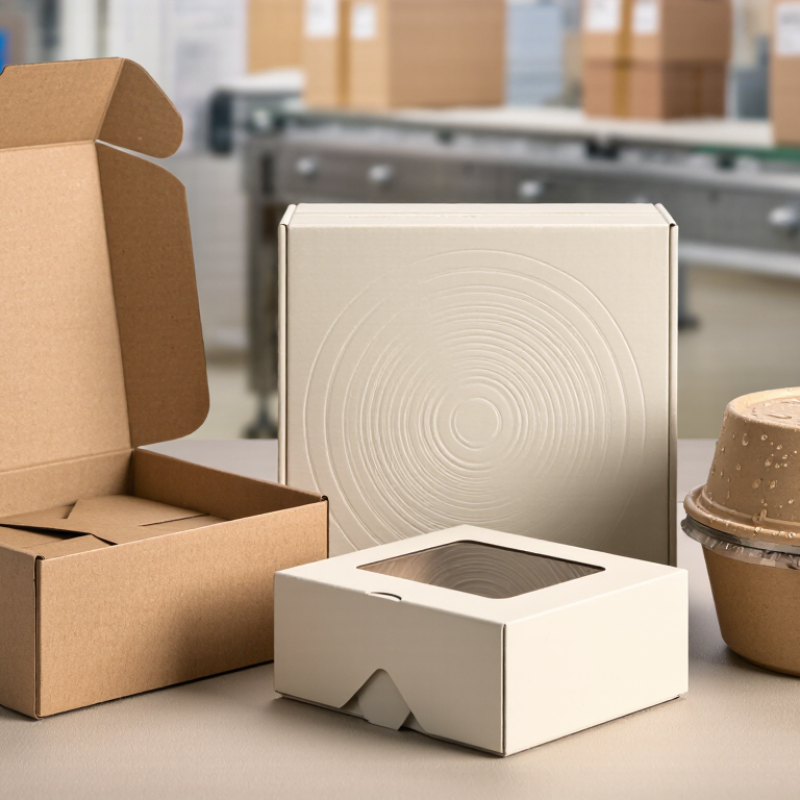
Custom food packaging boxes made in China cover several practical formats. Folding carton boxes suit cookies, tea, snacks, and dry foods. They are lightweight, printable, and easy to store flat. Kraft paper versions create a natural appearance, while coated paper supports sharper colors. However, dark printing can hide small text. Good structure matters.
Rigid boxes provide stronger protection for gift foods, confectionery, and premium assortments. Their thick walls resist crushing during delivery. Magnetic closures, paper sleeves, and molded inserts can improve the opening experience. Corrugated boxes work better for larger food sets or direct shipping. They use fluted layers to absorb impact. A beautiful box can still fail if the insert shifts during transport.
For oily or moist foods, packaging needs a suitable inner barrier. Grease-resistant paper, laminated board, and sealed trays are common choices. Takeaway boxes may include locking tabs, ventilation holes, or foldable handles. Window boxes use clear film to display products, but the film must suit the intended food-contact application. In China, reliable packaging projects usually involve dieline checks, color proofs, compression testing, and food-contact documentation. Suppliers should confirm material composition and printing safety before mass production. Details can disappoint. A box may look correct on screen yet feel weak in hand. Samples reveal these problems early, although one sample cannot represent every production batch.
Materials and Structural Options for Food Packaging Boxes
What Are the Top Custom Food Packaging Boxes in China?
Materials and Structural Options for Food Packaging Boxes
China’s custom food boxes often use coated paperboard, kraft board, corrugated fiberboard, or molded pulp. Each material serves a different purpose. Paperboard suits biscuits, tea, and dry snacks. Corrugated board protects heavier cartons during shipping. Molded pulp offers cushioning without foam, but its surface may feel less refined.
Food safety comes first. Food-contact coatings should resist grease, moisture, and migration. A folding carton saves warehouse space because it ships flat. A rigid box feels premium, yet it uses more material and costs more to transport. A magnetic closure may look attractive, but it can complicate recycling. According to FAO’s The State of Food and Agriculture 2019, about 14% of food is lost between harvest and wholesale. Better packaging can reduce crushing and moisture damage, although packaging is not the only solution.
Tips: Test the box with the actual product. Place warm pastries inside. Shake it during delivery. Check leaks, odor, compression, and opening force. The OECD Global Plastics Outlook 2022 reports that packaging creates about 40% of global plastic waste. This makes material reduction important. However, thinner is not always better. A weak carton may increase food damage and waste. I have seen attractive samples fail after humidity exposure. That lesson is easy to overlook. Choose structure, coating, and printing together, then verify performance through documented trials.
Key Customization Features for Branding and Product Protection
What Are the Top Custom Food Packaging Boxes in China?
Custom food packaging boxes in China combine visual identity with practical product protection. A strong design begins with the food itself. Dry snacks may use folding cartons, while sauces often need rigid boxes with secure inserts. The box size should limit movement without crushing the product. Fit matters more. Measured dimensions, board thickness, and tested closures help reduce damage during transport.
Branding features can include spot color matching, matte or gloss finishes, embossed logos, and clear product windows. However, decoration should not weaken the structure. Food-contact areas require suitable materials, coatings, and adhesives selected for the intended use. Printing samples should be checked for color consistency, sharp text, and odor. A packaging specialist should also review moisture resistance, stacking strength, and drop-test results before mass production.
Practical customization goes beyond appearance. Die-cut dividers can separate glass jars, while paper sleeves can improve grip and shelf visibility. Tear strips may make opening easier, but they need careful testing. Small details count. In real projects, a beautiful prototype may still reveal weak corners or a loose lid after handling. That is why pre-production samples, inspection records, and clear material specifications remain essential. Some designs also overuse finishes, increasing cost without improving protection. A more restrained package can sometimes communicate quality better.
| Custom Box Type | Typical Food Applications | Common Board or Material | Typical Material Thickness | Branding Customization Features | Product Protection Performance | Food-Safety and Barrier Options | Structural Features | End-of-Life Considerations |
|---|---|---|---|---|---|---|---|---|
| Folding Carton | Dry foods, tea, cereal, snacks, confectionery, and small retail products | Folding boxboard, solid bleached board, or recycled paperboard | Approximately 250–600 gsm | Offset or flexographic printing Matte or gloss coating Embossing Foil details | Good for lightweight products; moderate resistance to compression and scuffing | Suitable for indirect food contact; grease, moisture, and oxygen barriers can be added when required | Die-cut panels, tuck flaps, locking tabs, window cut-outs, and tear-open strips | Generally recyclable when made without difficult-to-separate laminates |
| Corrugated Shipping Box | Meal kits, beverage multipacks, subscription food deliveries, and e-commerce orders | Single-wall or double-wall corrugated board with kraft or test liner | Approximately 3–7 mm board thickness, depending on flute construction | Flexographic exterior printing Printed tape Interior printing Custom inserts | Very good stacking strength and cushioning; suitable for transport and warehouse handling | Water-resistant coatings, grease-resistant papers, and insulated liners may be used for specific products | Self-locking mailer styles, crash-lock bottoms, dividers, handles, and protective inserts | Widely recyclable if free from excessive plastic film and contamination |
| Rigid Setup Box | Premium chocolates, gift sets, specialty foods, and seasonal food collections | Greyboard or chipboard wrapped with printed paper | Approximately 1.2–3.0 mm rigid board | High-quality offset printing Soft-touch coating Debossing Metallic foil | Excellent dimensional stability and presentation; strong protection against crushing | Food-contact liners or inner pouches are normally needed when the food touches the package | Magnetic closures, lift-off lids, drawers, ribbons, trays, and custom compartments | Recycling can be more difficult when wrapped papers, magnets, ribbons, or mixed materials are used |
| Window Paper Box | Bakery items, cookies, pastries, confectionery, and visual gift packaging | Paperboard or kraft board with a transparent cellulose or plastic window | Approximately 300–600 gsm | Full-color printing Kraft appearance Spot coating Custom window shape | Good product visibility and moderate structural protection; not ideal for heavy loads | Grease-resistant inner coating and food-safe liners can help protect the board from oily foods | Auto-lock base, tuck-top lid, ventilation holes, insert trays, and carry handles | Paperboard is recyclable; window recyclability depends on whether the window is removed and on local facilities |
| Takeaway Food Box | Fried foods, noodles, rice meals, salads, sandwiches, and prepared meals | Food-grade paperboard, kraft board, or molded-fiber-based paper packaging | Approximately 250–500 gsm | One- or two-color printing Water-based inks Custom die cuts Printed interior | Good for short-term handling; venting helps reduce condensation in hot foods | Grease-resistant coatings, water-based barriers, and heat-resistant food-contact treatments are available | Foldable locking tabs, vent holes, compartments, handles, and leak-reducing folds | Usually recyclable when made from paper fiber and free of heavy food contamination |
| Paper Food Pouch or Bag Box | Ground coffee, dry snacks, grains, nuts, pet treats, and powdered food products | Kraft paper or coated paper with an inner barrier layer | Paper grammage commonly ranges from 60–180 gsm per paper layer | Rotogravure or flexographic printing Custom zipper area Matte finish Clear product window | Good for lightweight dry products; limited protection against crushing unless supported by an outer box | High-barrier structures may include moisture, oxygen, aroma, or light protection layers | Stand-up gusset, flat bottom, resealable zipper, tear notch, valve, and hanging hole | Recyclability depends on the barrier structure; mono-material paper or fiber-based designs are easier to process |
| Tube-Style Paper Box | Tea, confectionery, biscuits, spices, nuts, and dry snack assortments | Spiral-wound paperboard or rigid paper tube with metal, paper, or plastic closures | Approximately 1–3 mm wall thickness | 360-degree graphics Textured paper wrap Foil stamping Printed lid | Good resistance to impact and compression; cylindrical structure supports premium presentation | Inner bags, liners, or coatings are commonly required for moisture, aroma, or grease protection | Slip lids, metal ends, paper lids, pull tabs, inner trays, and tamper-evident seals | Recycling varies according to the combination of paperboard, metal, plastic, adhesive, and liner materials |
| Partitioned Food Box | Chocolate assortments, snack collections, tasting sets, and multi-compartment gift packs | Folding carton or corrugated board with paperboard dividers | Approximately 300–700 gsm for cartons; thicker grades for shipping formats | Custom compartment layout Printed sleeves Numbered sections Instruction panels | Very good separation and organization; reduces product movement and contact damage | Food-safe liners, individual wrappers, and grease-resistant divider materials can be specified | Removable dividers, molded inserts, locking bases, sleeves, and presentation trays | Generally recyclable when dividers and inserts use compatible paper-based materials |
| Insulated Corrugated Box | Fresh foods, chilled meal kits, confectionery, produce, and temperature-sensitive deliveries | Corrugated outer box combined with paper-based or other insulating liner materials | Outer board commonly uses single-wall or double-wall construction | Exterior brand printing Instruction graphics Tamper seals Custom inserts | Good transport protection and improved temperature retention when paired with suitable coolant or liner systems | Moisture-resistant liners, leak-resistant bags, absorbent pads, and food-safe inner packaging may be used | Fitted inserts, coolant compartments, ventilation control, tear strips, and tamper-evident closures | Recycling depends on separating the corrugated board from insulation, films, coolant packs, and contaminated components |
How Chinese Manufacturers Produce and Quality-Check Food Boxes
China’s leading custom food packaging boxes include folding cartons, rigid gift boxes, paper trays, and corrugated shipping cases. The best choice depends on moisture, stacking pressure, temperature, and delivery distance. Manufacturers usually begin with food-grade paperboard, water-based inks, and approved coatings. They then convert sheets through printing, die-cutting, creasing, folding, and gluing.
Quality control starts before production. Operators check paper thickness, basis weight, whiteness, and moisture content. A small moisture difference can weaken a carton during humid transport.
Printing teams inspect color variation, registration, barcode readability, and ink adhesion. Finished boxes face compression, drop, vibration, and leakage-related tests when necessary.
Food-contact materials must also meet China’s GB 4806.8-2022 requirements for paper, paperboard, and paper products. ISO 22000-based hygiene controls can strengthen traceability across the factory.
The data makes these checks practical, not decorative. FAO’s 2019 report estimated that 14% of food is lost between harvest and retail, while the UNEP Food Waste Index Report 2024 recorded 1.05 billion tonnes of food waste in 2022.
Better packaging cannot solve every loss, but weak boxes can increase it. My factory experience suggests that sampling is useful, yet not perfect. A batch may pass laboratory tests and still fail after rain, stacking, or rushed loading. Reliable manufacturers retain production samples, record test results, and investigate defects instead of hiding them. Small gaps matter.
Choosing the Right Chinese Packaging Supplier for Your Needs
Choosing a Chinese packaging supplier requires more than comparing unit prices. The right partner should match your food type, sales channel, and compliance needs. Folding cartons suit dry snacks and gift sets, while corrugated boxes protect heavier meal kits during delivery. Rigid boxes add presentation value but increase storage and freight costs. According to Smithers’ The Future of Sustainable Packaging to 2028, the global sustainable packaging market is projected to grow from about $274 billion in 2023 to nearly $394 billion by 2028. Ask suppliers for material certificates, food-contact declarations, migration test results, and clear production tolerances. Do not accept vague claims.
Audit the factory before approving samples. Check printing consistency, box compression, adhesive quality, and the cleanliness of packing areas. Request a pilot order with your actual dimensions and product weight. A supplier may produce beautiful samples, yet struggle with a 50,000-unit run. That gap matters. The Food and Agriculture Organization reported that 13.2% of food is lost between harvest and retail globally, making protective packaging a practical quality-control decision. Suppliers should explain how moisture barriers, grease resistance, and ventilation affect shelf life. Some “eco” coatings perform poorly with oily foods. That deserves testing, not trust. Confirm lead times, inspection procedures, replacement terms, and communication routines in writing. A lower quote can conceal thinner board, weaker printing, or costly delays. Sometimes, paying slightly more secures better traceability and fewer rejected cartons.
FAQS
Folding cartons suit cookies, tea, snacks, and dry foods. They store flat and remain lightweight. Rigid boxes protect gift foods and confectionery. Corrugated cases work better for larger sets and direct shipping.
Dry foods can use standard paperboard cartons. Oily or moist foods need grease-resistant paper, laminated board, or sealed trays. Sauces require secure inner barriers. The wrong material may soften, stain, or leak.
The box should limit movement without crushing the product. Thick walls resist pressure. Fluted layers absorb impacts in shipping cases. Inserts must stay fixed. A loose insert can damage products during transport.
Options include matte finishes, gloss finishes, embossing, spot colors, and product windows. Paper sleeves can improve grip and shelf visibility. Decoration should not reduce strength. Too many finishes may add cost without adding value.
No. The clear film must suit the intended food-contact application. It should remain securely attached during handling. The window can display cookies or snacks clearly. Film compatibility still needs confirmation.
Useful checks include compression, drop, vibration, leakage, and stacking tests. Teams should inspect color, barcode readability, and ink adhesion. Pre-production samples reveal weak corners and loose lids. One sample is not enough.
Request material composition, board thickness, coating details, and printing information. Ask for inspection records and test results. Food-contact documentation should match the intended use. Clear specifications prevent expensive misunderstandings.
Humidity can weaken paperboard during storage or transport. Small moisture differences matter. Boxes may look fine but feel weak in hand. Rain, stacking, and rushed loading can expose hidden problems.
They can protect light, dry products when the structure fits well. Premium assortments usually need rigid boxes or strong inserts. Folding cartons offer lower weight and flat storage. They are not automatically suitable for fragile items.
Digital artwork cannot show every physical problem. Samples reveal odor, weak folds, poor color, and closure issues. Laboratory results are useful but incomplete. Real handling remains unpredictable. That is worth remembering.
Conclusion
Custom Food Packaging Boxes made in China are available in a wide range of styles, including folding cartons, rigid boxes, window boxes, takeaway containers, and display packaging. Manufacturers can produce these boxes from kraft paper, corrugated board, coated paperboard, recycled materials, and other food-suitable substrates. Structural options such as inserts, dividers, handles, locking tabs, and custom shapes help improve product presentation, storage, and protection during transport.
Branding and functionality can be enhanced through custom sizes, printed graphics, finishes, labels, ventilation features, and protective coatings suitable for the product’s needs. Chinese manufacturers typically support the process from artwork preparation and sampling to printing, die-cutting, assembly, and final inspection. Quality checks may cover dimensions, material strength, color consistency, print accuracy, cleanliness, and packaging performance. When choosing a supplier, buyers should evaluate production capabilities, material documentation, communication, sampling procedures, quality systems, minimum order quantities, lead times, and shipping support to ensure a reliable packaging solution.

Blog Tags: