Packaging Blog & Expert Insights
Explore box design tips, sustainable packaging ideas, material guides, and industry trends to help elevate your brand unboxing experience.
Branded E-Commerce Mailers
Rigid Box Unboxing Trends
Precision Folding Cartons
How to Choose Luxury Rigid Gift Boxes in 2026
Table of Contents
- Identify the Gift’s Purpose, Recipient, and Brand Requirements
- Choose a Box Structure and Size That Fit the Product
- Compare Materials, Finishes, and Protective Features
- Assess Customization Options and Sustainability Standards
- Evaluate Supplier Quality, Lead Times, and Total Cost
- FAQS
- Conclusion
- Related Posts
In 2026, a luxury rigid gift box must do more than protect a product. It should feel deliberate before the lid opens. The weight of the board, the clean edge of the wrap, and the quiet resistance of a magnetic closure all shape that first impression. Small details matter.
Smithers’ The Future of Global Packaging to 2028 describes a global packaging market exceeding US$1 trillion. That broad figure is not a forecast for luxury gift boxes alone, but it shows the scale of the packaging choices brands now make. For buyers, the useful questions are more specific: Does the structure protect the item in transit? Do the paper, finish, and insert suit the brand? Can the supplier deliver consistent color and fit across production runs? A glossy sample is not enough.
James Pilditch, a packaging specialist and author of The Silent Salesman, is often associated with the line, “The package is the product.” It is a useful reminder, not a complete buying rule. A beautiful box can still be wasteful, awkward to store, or poorly matched to the item inside. And sometimes the best choice is less ornate. This guide to Luxury Rigid Gift Boxes explains how to weigh materials, construction, finishes, customization, and supplier capability in 2026. The trade-offs are real. We will examine them plainly.
Identify the Gift’s Purpose, Recipient, and Brand Requirements
A luxury rigid gift box should suit the gift’s purpose, the recipient, and the brand experience. Start by asking whether the box will protect a fragile item, create a memorable unboxing, or support repeated use. A ceramic cup needs a snug insert and room around its handle. A small keepsake may need less space and a soft lining. That detail matters.
Consider the recipient’s habits and expectations. A client gift may call for a restrained finish, while a family celebration can feel warmer with a textured wrap or personal note. Check the box’s weight, opening style, and storage needs. A magnetic lid can feel polished, but it may be awkward for someone with limited hand strength. Teams sometimes pick color before checking fit. It happens, and it can lead to costly revisions.
Tips: Place the actual item in a sample box. Test the insert, lid, and removal process by hand. Take photos under natural light before approving the finish.
Finally, match practical choices to brand requirements. Confirm approved colors, logo size, typography, and any required messaging before production. Ask for a physical sample, since screen colors can differ from printed materials. If the box will travel, test how it holds up during handling. Not every premium detail improves the experience; choose only what serves the gift and recipient.
Choose a Box Structure and Size That Fit the Product
A luxury rigid gift box should fit the product closely without squeezing it. Measure the item at its widest, tallest, and deepest points, including any attached parts or protective wrapping. Measure the item first. A box that is too tight can scuff delicate surfaces, while excess space lets products shift during handling.
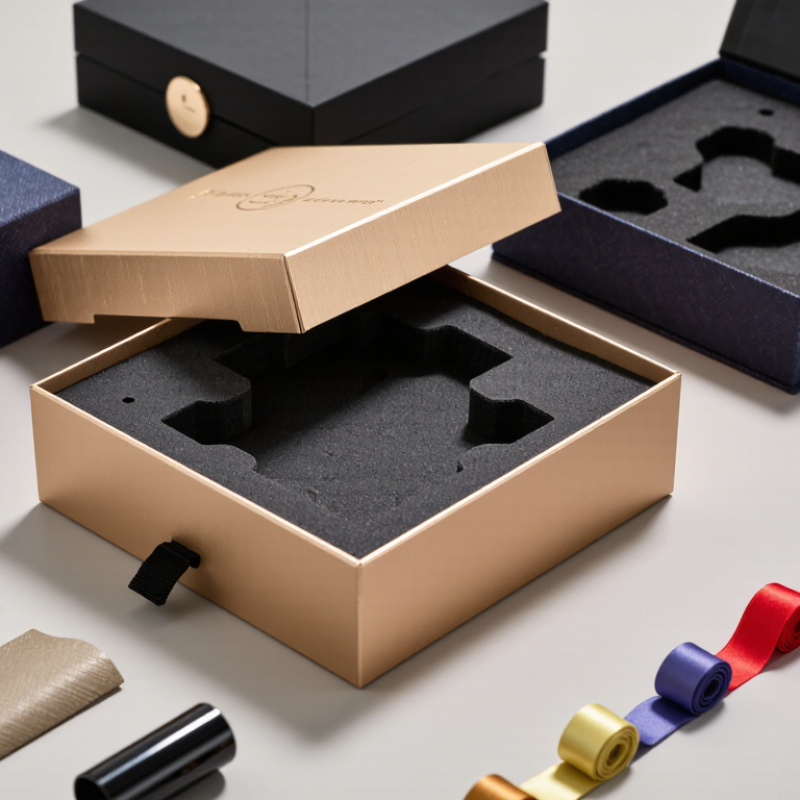
Choose the structure around how the product will be presented and packed. A lift-off lid suits a simple, considered reveal; a hinged book-style box can hold a product securely while displaying it in place. For a bottle or small object, a fitted insert keeps it centered. Leave enough room for fingers to lift the item out. That gap matters. Paper, foam, or molded-pulp inserts may each change the internal dimensions, so check the assembled sample rather than relying only on a drawing.
Think about the full packing process, too. A box that looks elegant on a table may be awkward to close when tissue or a card is added. Check the lid alignment, insert fit, and opening clearance with the actual product. One detail can still be missed: materials may compress slightly, and handmade assembly can vary. A small tolerance helps, but too much makes the product look lost inside. The best fit feels secure, opens easily, and leaves only the space the presentation needs.
| Box Structure | How It Opens | Suitable Products | Sizing and Insert Guidance | Protection and Practical Considerations |
|---|---|---|---|---|
| Two-Piece Telescoping Box | A separate lid fits over the base; the lid may cover part or all of the box depth. | Apparel accessories, candles, books, confectionery, and gift sets. | Measure the product or insert in length × width × depth. Allow space for the insert and a small fitting clearance; do not size the box from the product alone. | A versatile, sturdy format with a simple presentation. A close-fitting lid can require more effort to remove, so allow for paper wrap or other contents. |
| Shoulder-Neck Box | A raised inner neck sits between the base and lid, leaving a visible shoulder when closed. | Jewelry, keepsakes, premium accessories, and compact gift items. | Size the base around the insert, then account for the neck height and the intended lid overlap when specifying the internal depth. | The neck helps align the lid and gives the box a distinctive profile. It uses more material and may take up more storage space than a basic two-piece box. |
| Book-Style Magnetic Box | A hinged cover folds over the base and is commonly secured with concealed magnets. | Presentation kits, cosmetics, electronics accessories, and multi-item sets. | Measure the complete insert layout, including compartments and any raised product. Check both the usable base depth and the closed box depth. | Opens flat for product presentation. Magnets and the hinge add construction considerations; confirm closure strength with the finished contents. |
| Drawer or Slide Box | An inner tray slides out of a rigid outer sleeve, often using a ribbon pull or finger notch. | Small gifts, stationery, samples, jewelry, and lightweight sets. | Allow operating clearance between the tray and sleeve. Test the filled tray, since an insert that presses against the sleeve can make opening difficult. | Provides a gradual reveal and can store compact products neatly. A tight fit, surface friction, or a heavy payload can affect smooth movement. |
| Collapsible Rigid Box | Folds flat for storage and is assembled into a rigid shape using pre-applied adhesive or tabs. | Gift sets and retail packaging where reduced flat-pack storage volume is useful. | Confirm the assembled internal dimensions with the supplier. Check that corner folds and assembly features do not reduce the insert’s usable space. | Can reduce storage and freight volume before assembly. The assembled box should be checked for squareness, corner strength, and reliable closure. |
Compare Materials, Finishes, and Protective Features
In 2026, compare a rigid box’s board, wrap, and construction before judging its shine. Greyboard offers a firm, economical core; thicker board feels substantial but adds weight and shipping cost. Paper wraps provide a warm, tactile surface, while coated paper resists light scuffs and fingerprints more easily. Texture matters. Run a thumb across a sample, then inspect its corners, where thin wraps may crease or lift.
Cloth and specialty papers create richer texture, yet can show dust or absorb marks during handling. Foil stamping and embossing add contrast, but deep embossing may weaken delicate paper around fine lettering. Matte coatings soften glare; gloss makes colors appear brighter, though scratches may become more visible. Ask for a physical proof under your actual lighting. Digital images hide flaws.
Protection depends on fit as much as board strength. Test the insert with the real item: it should stay centered without forcing the lid or rattling when gently tilted. Foam cushions fragile shapes, while molded pulp or folded board may reduce plastic use; neither suits every product. Check lid depth, hinge alignment, and test results from a sample packed as intended. One caveat: elaborate finishes can look less refined after repeated opening.
How to Choose Luxury Rigid Gift Boxes in 2026
Compare typical insert materials by their role in protecting gift contents.
The 1–5 scores are a qualitative comparison, not standardized or lab-tested measurements. Rigid paperboard provides a strong box shell, while a well-fitted insert helps limit movement; corrugated board and molded pulp offer shaped support, and EVA foam provides cushioning for delicate items. Matte lamination, foil stamping, and embossing mainly affect appearance and feel—protection depends more on the box structure, insert fit, and closure.
Assess Customization Options and Sustainability Standards
A luxury rigid gift box should feel precise before it looks ornate. Ask suppliers for a production sample, not only a digital mock-up. Check whether the lid closes evenly, corners stay sharp, and inserts hold products without excess material. Custom details such as foil, embossing, colored paper, and fitted inserts can add distinction. They can also complicate recycling when coatings or mixed materials are difficult to separate.
Sustainability claims need evidence. The U.S. Environmental Protection Agency reported that paper and paperboard packaging had a 68.2% recycling rate in 2018. That figure covers a broad material category; it does not guarantee that a particular rigid box is recyclable locally. Ask for fiber-content documentation, sourcing certifications, and clear guidance on coatings, magnets, ribbons, and inserts. FSC chain-of-custody certification can support responsible sourcing claims, but it does not certify the whole box as recyclable.
Looks premium. Still, the trade-off deserves scrutiny. A thick board may protect a delicate item, yet unnecessary layers can increase material use and shipping weight. Compare lighter board options, recycled fiber availability, and packaging performance before approving a finish. Request a sample that uses the intended materials, then check whether components separate by hand. A beautiful box is not automatically a better one. EPA’s 2018 recycling data is useful context, but local collection rules and actual box construction matter more for disposal decisions.
Evaluate Supplier Quality, Lead Times, and Total Cost
A luxury rigid box should feel precise before it looks impressive. Check board thickness, wrapped corners, lid fit, hinge movement, and insert stability on a production-like sample. Ask the supplier for written tolerances, material specifications, and inspection records. Test a packed box for scuffs and movement during handling. Small flaws matter. A flawless hand-finished sample may not represent a full production run, so request samples from a pilot batch when possible.
Lead time means more than factory days. Include sampling, artwork approval, material sourcing, production, inspection, and freight. McKinsey’s 2020 supply-chain analysis estimated that disruptions can cost companies an average of 45% of one year’s profits over a decade. That is a useful reason to check capacity and contingency plans, not just the quoted ship date. One caveat: supplier timelines can look overly neat on paper. Ask what happens if an approval or shipment slips.
Compare total landed cost, not unit price alone. Include tooling, custom inserts, hand assembly, protective shipping cartons, freight, duties, and likely rework. The CSCMP 2023 State of Logistics Report put U.S. business logistics costs at $2.3 trillion in 2022, or 9.1% of GDP. While that figure covers the wider economy, it shows why transport and storage deserve attention. Ask suppliers to price the same specification and delivery terms; otherwise, a cheap quote may simply exclude costly details.
FAQS
Start with the gift’s purpose and size. A ceramic cup needs a snug insert and space around its handle. Test with the actual item.
Check weight, opening style, and storage needs. A magnetic lid may feel polished but can be difficult for someone with limited hand strength. Small details matter.
Place the product inside and test the lid, insert, and removal process. Photograph the finish in natural light. Screen colors can mislead.
Foil, embossing, colored paper, and fitted inserts can add character. They may also make recycling more complicated. More decoration is not always better.
Ask for fiber-content records and clear details about coatings, magnets, ribbons, and inserts. Recycling depends on local collection rules and the actual construction. I would not rely on broad recycling figures alone.
Check corner wrapping, lid fit, hinge movement, and insert stability on a production-like sample. Ask for written specifications and inspection records. A perfect sample may not reflect every box.
Include sampling, artwork approval, material sourcing, production, inspection, and freight. Ask what happens if an approval or shipment is delayed. Timelines can look neat on paper.
Compare tooling, inserts, hand assembly, protective cartons, freight, duties, and possible rework—not just unit price. Request quotes for the same specifications. Cheap can mean incomplete.
Conclusion
Choosing Luxury Rigid Gift Boxes in 2026 starts with understanding the gift’s purpose, the recipient, and the presentation requirements. Consider how the box will be used and displayed, then select a structure and size that hold the product securely without excess space. A well-fitted box can improve presentation while helping prevent movement and damage during handling.
Compare material strength, surface finishes, and protective features to find a balance between appearance and function. Explore customization options that suit the intended look, while considering recyclable materials and other sustainability standards. Before making a decision, assess supplier quality, production lead times, and the total cost, including customization and delivery. Evaluating these factors together can help you choose packaging that feels thoughtful, protects its contents, and meets practical requirements.

Blog Tags: