Packaging Blog & Expert Insights
Explore box design tips, sustainable packaging ideas, material guides, and industry trends to help elevate your brand unboxing experience.
Branded E-Commerce Mailers
Rigid Box Unboxing Trends
Precision Folding Cartons
What Are the 2026 Best Custom Beverage Packaging Boxes?
Table of Contents
- What Makes Custom Beverage Packaging Boxes Essential in 2026?
- Which Materials and Structures Define the Best Beverage Boxes?
- How Do Custom Designs Improve Beverage Protection and Branding?
- What Printing and Finishing Options Are Available for Beverage Boxes?
- How Should Businesses Choose Custom Beverage Packaging Boxes in 2026?
- FAQS
- Conclusion
- Related Posts
The search for the 2026 best Custom Beverage Packaging Boxes begins with evidence, not decoration. Beverage brands now compete through shelf presence, delivery protection, material choices, and measurable customer experience. Smithers’ The Future of Global Packaging to 2028 estimates that the worldwide packaging market will approach $1.2 trillion by 2028. Its analysis also highlights sustainability, convenience, and packaging efficiency as major growth forces.
PMMI’s beverage packaging research points toward automation, flexible production, and improved product protection. These trends matter for custom boxes carrying glass bottles, cans, powdered drinks, or premium sample sets. A box that arrives crushed has already failed, even if its artwork looks expensive. Small details matter. Board strength, internal dividers, moisture resistance, and accurate sizing can reduce movement inside the carton.
Pierre Pienaar, President of the World Packaging Organisation, has stated, “Packaging is an essential part of our daily lives.” His observation reflects a practical truth: packaging protects value before it communicates a brand story. The best Custom Beverage Packaging Boxes should therefore balance structure, visual identity, production cost, and responsible material selection. Recyclable paperboard may be suitable for many applications, but it is not automatically the best answer. Beverage weight, condensation, storage conditions, and shipping distance still require testing. That part is easy to overlook.
This guide examines the strongest 2026 options through those real-world criteria. Market forecasts can differ by region and definition. Packaging decisions should remain evidence-based, tested, and honestly reviewed.
What Makes Custom Beverage Packaging Boxes Essential in 2026?
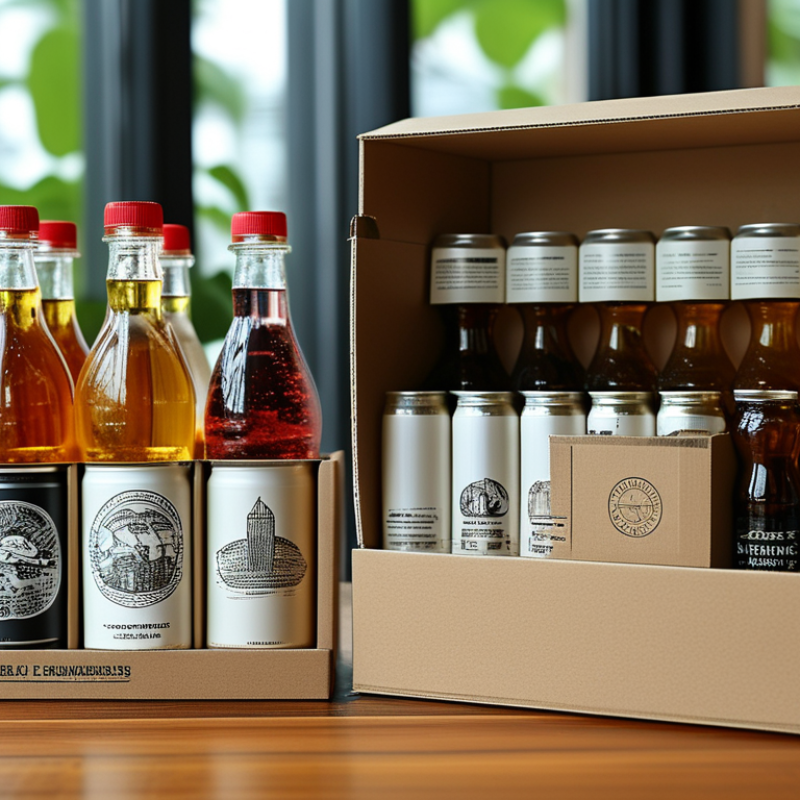
In 2026, custom beverage packaging boxes are essential because they protect products while communicating quality before the first sip. A well-designed box can reduce crushing, moisture exposure, and movement during delivery. It should fit the bottle, can, or pouch closely. Excess space often creates avoidable damage.
Packaging also supports clear product information. Buyers may check ingredients, storage guidance, recycling instructions, and preparation details quickly. Accurate printing builds trust, especially when customers cannot inspect the beverage directly. QR codes can provide sourcing details or serving ideas, but they must remain readable after handling. Small details matter.
Sustainability now influences purchasing decisions and packaging specifications. Recyclable paperboard, water-based coatings, and right-sized structures can reduce material waste. However, “eco-friendly” should not be treated as a complete claim. Companies need reliable supplier data and local recycling guidance. The best custom beverage packaging boxes balance protection, appearance, cost, and environmental performance.
From practical packaging tests, weak corners and loose inserts often cause more problems than poor graphics. Drop testing, compression checks, and moisture evaluation reveal these weaknesses early. No box is perfect. That assumption can fail. A design may look impressive on a screen but perform poorly in a warehouse. Teams should review real samples, transport conditions, and customer feedback before approving production.
What Makes Custom Beverage Packaging Boxes Essential in 2026?
Custom beverage packaging must support sustainability goals as well as product protection. The recycling-rate benchmarks below show why recyclable, material-efficient paperboard boxes are becoming an important part of modern beverage packaging strategies.
U.S. recycling-rate benchmarks for selected beverage-container materials, based on the U.S. Environmental Protection Agency’s 2018 National Overview: Facts and Figures on Materials, Wastes and Recycling. Higher recyclability and efficient material use are key considerations when developing custom beverage packaging for 2026.
Which Materials and Structures Define the Best Beverage Boxes?
The best custom beverage boxes in 2026 begin with material choices, not decoration. Recycled paperboard suits lightweight cans and small bottles. Corrugated fiberboard offers stronger protection during warehouse handling. For heavier glass, use a rigid outer shell with molded fiber inserts. These inserts separate bottles and reduce clinking.
Moisture changes the decision. Cold bottles create condensation inside delivery cartons. A water-based coating can improve surface resistance without making recycling unnecessarily difficult. However, every coating adds complexity. “Recyclable” claims require checking local recycling systems and the complete material structure. A thin plastic window may look attractive, but it can complicate sorting.
Structure matters as much as fiber content. Tuck-end cartons work well for retail shelves and flat shipping. Auto-lock bases support heavier beverages with less manual assembly. Telescoping boxes create a premium unboxing feel, though they use more material. A snug divider should hold each bottle firmly without scraping labels.
I have seen attractive boxes fail at the corners.
Compression testing and drop testing reveal weaknesses that photographs cannot show. Practical teams should test filled boxes, cold surfaces, and uneven pallet pressure. Standardized packaging tests can provide useful evidence, but real delivery conditions still deserve attention. No box is perfect. A lighter package may reduce material use, yet it may need stronger inserts after repeated handling. The best design balances protection, recyclability, assembly time, and honest performance claims.
How Do Custom Designs Improve Beverage Protection and Branding?
The 2026 best custom beverage packaging boxes will protect the product while making the package memorable. Custom sizing reduces empty space, limiting bottle movement during delivery. A fitted insert can separate glass bottles, cans, or small sample containers. Corrugated fluting also absorbs compression and vibration. In practical carton trials, this structure matters more than decorative printing alone. Drop testing should examine corners, seams, and the weakest internal contact points. Small failures become expensive returns.
According to the U.S. Environmental Protection Agency’s latest packaging data, containers and packaging represented 28.1% of municipal solid waste generation in 2018, equal to 82.2 million tons. Material choices deserve serious attention. The 2023 Sustainable Packaging Consumer Report found that 82% of surveyed consumers would pay more for sustainable packaging. Custom boxes can support this preference through right-sized construction, recycled fiber, and water-based finishes. Clear color systems and tactile opening features can strengthen recognition without overcrowding the panel. However, sustainability claims require evidence. A recyclable box is not automatically recycled everywhere. That distinction needs honest wording.
A better design is measurable. Track breakage rates, dimensional weight, pack-out time, and repeat-purchase responses. Packaging professionals should also review ISTA transit-testing procedures before production. Visual appeal can hide weak protection. Sometimes, a simpler box performs better. This trade-off deserves testing.
What Are the 2026 Best Custom Beverage Packaging Boxes? - How Do Custom Designs Improve Beverage Protection and Branding?
| Custom Box Format | Typical Beverage Use | Typical Material Structure | Protection Performance | Branding Opportunities | Sustainability Considerations | Best Fit in 2026 |
|---|---|---|---|---|---|---|
| Custom Folding Carton | Single cans, small bottles, sachets, and multipacks | Paperboard commonly ranging from approximately 250 to 500 gsm, depending on required stiffness | Good surface protection and product separation; limited resistance to heavy compression and direct moisture | Large printable panels, die-cut windows, spot finishes, QR codes, regulatory information, and color-managed graphics | Often recyclable when made from compatible paperboard and free from difficult-to-separate components; fiber certification and recycled content can be specified | Retail shelves, promotional beverage sets, and lightweight secondary packaging |
| Custom Corrugated Mailer | Direct-to-consumer shipments of cans, bottles, concentrates, and beverage gift sets | Single-wall corrugated board, commonly using B-, E-, or C-flute profiles selected for size and cushioning needs | Better stacking strength and impact absorption than folding cartons; custom inserts help prevent movement and bottle-to-bottle contact | Printed exterior and interior surfaces, tear strips, locking features, opening messages, and reusable-return instructions | Widely recyclable through paper recovery systems when coatings, laminates, and non-paper fittings are limited | E-commerce, subscription deliveries, sampling kits, and gift shipments |
| Partitioned Bottle Shipper | Glass bottles, premium beverages, sauces, syrups, and mixed bottle assortments | Corrugated outer box with die-cut or folded fiber partitions and reinforced bottle neck or base support | Strong control of internal movement and contact damage; performance depends on board grade, bottle weight, and validated drop testing | Structured product presentation, individual flavor identification, printed dividers, and internal storytelling | Fiber-based partitions are generally easier to recycle than plastic inserts; avoid mixed materials where local recycling systems do not accept them | Fragile glass packaging, tasting collections, and multi-flavor gift boxes |
| Insulated Corrugated Shipper | Temperature-sensitive beverages, chilled products, and products requiring controlled transit conditions | Corrugated outer carton combined with paper-based, molded-fiber, or other validated insulating components | Provides thermal buffering and impact protection; it does not replace a validated cold-chain plan or temperature testing | Clear handling instructions, temperature guidance, tamper-evident features, and premium unboxing design | Paper-based insulation can simplify disposal; gel packs, liners, and coatings should be designed for separation and local recycling rules | Chilled delivery, seasonal campaigns, and temperature-sensitive direct shipping |
| Molded-Fiber Beverage Box | Cans, bottles, tasting sets, and products needing shaped internal support | Molded cellulose fiber, frequently paired with a printed paperboard or corrugated outer sleeve | Good cushioning and separation when geometry is correctly matched to the container; moisture resistance requires careful material selection | Distinctive molded shapes, tactile natural texture, printed sleeves, embossing, and minimal-color design systems | Can use recycled or renewable fiber and may reduce plastic insert use; molded parts should be checked for recyclability and wet-strength additives | Plastic-reduction programs, eco-focused packaging, and premium tactile presentations |
| Rigid Two-Piece Gift Box | Premium bottle presentations, limited collections, corporate gifts, and ceremonial beverages | Rigid paperboard construction, often with a wrapped outer surface and custom interior support | High structural rigidity and presentation quality; additional inserts may be needed for shipping shock and bottle restraint | High-impact unboxing, textured papers, foil alternatives, embossing, magnetic or ribbon-free closures, and premium interior printing | Can be reused because of its durable structure; recyclability may be reduced by fabric, magnets, foam, or laminated coverings | High-value gifting where reuse and perceived quality justify the additional material |
| Custom Beverage Carrier | Two-, four-, or six-pack cans and bottles for retail or event distribution | Folded paperboard or corrugated board with integrated handles and locking panels | Supports grouped products and improves handling; handle strength must be tested against the filled package weight | Highly visible handle area, side-panel graphics, flavor coding, promotional copy, and scannable campaign content | Uses less material than separate boxes in some configurations; fiber-only designs can simplify recycling | Retail multipacks, festivals, sampling events, and convenient carry-home formats |
Specification note: Actual performance varies with container shape, filled weight, board grade, closure design, humidity, shipping route, and handling conditions. Final packaging should be validated through compression, vibration, and drop testing before production.
What Printing and Finishing Options Are Available for Beverage Boxes?
Custom beverage boxes in 2026 rely on printing that protects clarity, shelf appeal, and product information.
Digital printing suits short runs and seasonal designs, while offset printing delivers sharp color consistency for larger orders. Flexographic printing remains practical for efficient production on suitable board materials. CMYK handles photographic artwork, but spot colors can improve logo and flavor recognition. White ink helps bright graphics stand out on kraft or dark paperboard.
Finishing creates the physical impression customers remember. Matte lamination gives a quiet, premium surface and reduces harsh reflections under store lighting. Gloss coating makes fruit images look vivid, but fingerprints may become more visible. Soft-touch coating feels smooth, though it can increase cost and may not suit every distribution environment. Foil stamping adds controlled highlights to names or small details. Embossing can make waves, leaves, or lettering easier to notice by touch. Keep it restrained.
During packaging trials, I have found that excessive effects can weaken readability.
A crowded box often looks less professional, even when production quality is high. Die-cut windows can reveal a bottle shape, but they may reduce structural strength if poorly positioned. Packaging teams should test scuff resistance, color accuracy, folding performance, and coating compatibility before approval. Beverage boxes also need inks and finishes selected for their intended use, storage conditions, and applicable packaging requirements.
A small print proof is useful. A full mockup is better.
How Should Businesses Choose Custom Beverage Packaging Boxes in 2026?
Choosing custom beverage packaging boxes in 2026 starts with the drink, not the artwork. Carbonated beverages need strong internal support and moisture-resistant board. Glass bottles require dividers, corner protection, and careful drop testing. For cans, compact dimensions can reduce empty space and shipping costs. In packaging trials, a box that feels rigid often still fails at the bottom seam. Test it filled, chilled, stacked, and handled repeatedly.
Sustainability must be measurable. McKinsey’s 2023 global packaging survey found that 60% of consumers were willing to pay more for sustainable packaging. However, this does not mean adding decorative materials. Choose fiber-based board with verified recycled content, water-based inks, and minimal coatings. Smithers’ The Future of Global Packaging to 2028 identifies recyclability and resource efficiency as continuing investment priorities.
Ask suppliers for fiber certification, material composition, and recovery guidance. “Eco-friendly” alone is weak evidence.
Cost needs a wider calculation. Compare the box price, assembly labor, warehouse space, damage rate, and freight weight. The right structure may cost slightly more but prevent broken bottles and returned orders. Consider opening experience, too. A tight sleeve, molded insert, and clear product window can create a premium moment. Yet windows may complicate recycling. That trade-off deserves testing, not assumptions.
Packaging machinery compatibility, minimum order quantities, lead times, and regional disposal systems also matter. Many businesses overlook the last point. They should not.
FAQS
They protect bottles, cans, and pouches during delivery. A fitted box reduces crushing, moisture exposure, and unwanted movement. It also communicates quality before the first sip.
Custom sizing limits empty space inside the carton. Less movement can reduce scratches, breakage, and impact damage. Loose packaging often fails quietly during transport.
Fitted inserts can separate glass bottles, cans, or sample containers. Corrugated fluting absorbs vibration and compression. Small gaps matter.
Include ingredients, storage guidance, recycling instructions, and preparation details. Printed information must remain accurate and easy to read. A QR code may add sourcing details or serving ideas.
Use recyclable paperboard, recycled fiber, water-based coatings, and right-sized structures. These choices can reduce unnecessary material and waste. “Eco-friendly” needs evidence.
Not always. Local recycling systems accept different materials and coatings. Companies should confirm supplier data and regional recycling guidance. The wording may need revision.
Conduct drop testing, compression checks, and moisture evaluation. Inspect corners, seams, inserts, and internal contact points. Real samples reveal weaknesses.
Track breakage rates, dimensional weight, pack-out time, and customer responses. Review transport conditions and warehouse handling. A beautiful box can still perform poorly.
Conclusion
Custom Beverage Packaging Boxes are becoming essential in 2026 as businesses seek packaging that protects products, communicates quality, and supports more sustainable operations. The best options combine durable, responsibly selected materials with practical structures designed for different beverage sizes, weights, and shipping conditions. Features such as secure inserts, reinforced walls, easy-open designs, and moisture-resistant coatings can help reduce damage while improving storage and customer convenience.
Custom design also gives businesses greater control over branding and product presentation. Colors, graphics, typography, and structural details can create a recognizable shelf presence, while printing methods and finishes such as matte or gloss coatings, embossing, foil effects, and spot treatments add visual and tactile appeal. When choosing packaging in 2026, businesses should evaluate product protection, material performance, sustainability goals, production quantities, customization flexibility, budget, and delivery requirements. A well-planned packaging solution should balance appearance, function, environmental responsibility, and cost while delivering a consistent experience from shipment to purchase.

Blog Tags: